This section exists to answer one question well rather than ten questions badly: what is this game, who is it for, and what does a good session look like. Our reviews state the game family first, then the session target, then the fit. If a page has not answered your "should I play this" question within its first screen, the review has failed at its job — write to the contact address and say so; review quality is edited against reader feedback, not just against play time.
Every play link on this site points to the partner host that develops or distributes the game. We mark those links as partner links deliberately: our editorial independence comes from being clear that hosting and reviewing are different jobs. When a partner host retires a title, we mark the entry and prune it at the next catalog pass — broken links are treated as review failures.
The catalog updates as partner hosts add and retire titles, and the review portals above the catalog list carry the current roster with difficulty and session-length metadata. If you are new to browser gaming, start with the puzzle category — its filter is the strictest and its titles reward patience least punished by browser limitations.
Our review standards
Reviews on this site are written after real play: we load the game on desktop and mobile browsers, play past the first difficulty bump, and note input behavior on both pointer and touch. Reviews mention session length because browser games live or die by whether a session fits a break; a five-minute game that demands twenty is a design failure worth naming.
We do not accept payment for placement or for review content, and partner hosts do not preview reviews. The catalog's metadata (difficulty, session, rating) comes from the partner host and is labeled as such; the editorial text is ours and is the part we stand behind. Disputes route through the contact page and corrections are logged on the page they correct.
Reading the catalog well
The catalog is a map, and maps reward a reading strategy. Start from the category portals rather than the grid: each portal opens with the category's family split — the one piece of context that predicts your experience better than any screenshot. From the portal, jump to a full review when one exists; when it does not, the roster row's difficulty and session metadata still tell you whether the game fits the next thirty minutes.
Session length is the most underused metadata in browser gaming. A game with a fifteen-minute session target punishes a five-minute window, no matter how good it is; a five-minute game in a two-hour window invites aimless grinding. Match the game to the window and half of your "browser games feel shallow" complaints disappear — the rest belong to games we declined to review.
What we add to hosted games
Our value is context, not hosting: session targets, family identification, fit assessment, and honest difficulty notes. We deliberately do not re-host games — developers keep their players, analytics, and update cadence; we keep the curation layer current. When a host retires a title, the entry is marked at the next pass rather than silently rotting; broken links are review failures and are treated as such.
Corrections work both directions. If a review's session target feels wrong after your own play, or a difficulty label misses, the contact page routes the note to the editor and corrections are logged on the page they fix. The catalog improves at the rate readers argue with it.
Technical post-mortem · Voxel sandbox / multiplayer building
Bloxd.io — Technical Post-Mortem
Core Game Loop & Mechanics
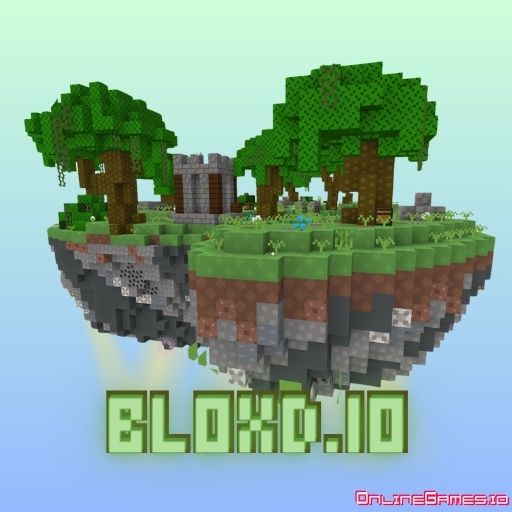
Bloxd.io is a voxel sandbox in the Minecraft lineage, compressed into a browser session: spawn, gather, build, and — in its competitive modes — race other players through parkour courses. The core loop differs by mode: creative play is gather-and-build with infinite resources, while parkour modes are a timer-and-checkpoint loop where the build vocabulary becomes the obstacle vocabulary.
Input latency in a multiplayer voxel game has two layers: local movement prediction and server reconciliation. Movement feels local because it is — the client simulates your motion immediately and reconciles against server state in the background. Block placement and destruction go through server validation (anti-grief), which introduces a visible 100-200ms confirmation delay on placement in high-latency sessions. The implementation mostly hides this with immediate local placement plus rollback on rejection, the standard approach, and rollback artifacts are rare enough that most players never notice them.
State management is chunk-based: the world divides into 16×16 column chunks, only nearby chunks are active, and edits are stored as deltas. This is what lets the game run in a browser tab alongside other tabs — memory footprint scales with your exploration radius, not the world size. Session persistence works through account-less local identifiers, so builds survive refreshes on the same device.
Level Design Philosophy
Onboarding is the strongest design element: a guided spawn area teaches movement, block placement, and the mode selector through physical space rather than menus. Within a minute, a new player has placed blocks, broken blocks, and seen another player do both — social proof as tutorial.
Difficulty in parkour modes follows a checkpoint ladder: courses are short with generous checkpoints early, tightening both course length and checkpoint spacing as you climb the course list. Reward feedback comes from leaderboard position and cosmetic unlocks rather than power progression — the correct choice for a skill-based mode, since power progression would break course difficulty calibration.
The build-mode reward loop is quieter and more durable: no notification rewards building, but the permanence of your construction is itself the feedback. This split — competitive modes get loud feedback, creative gets quiet permanence — is a sophisticated design decision that serves two different player motivations without compromising either.
Technical Implementation
This is the WebGL showcase of the catalog: greedy meshing over chunk geometry, face culling against adjacent solid blocks, and texture atlasing keep draw calls in double digits even with dense builds. Greedy meshing — merging coplanar block faces into single quads — is the difference between rendering one million triangles and a few thousand in a built-up area, and Bloxd implements it properly.
Chunk streaming over WebSocket keeps the payload per chunk small (delta-encoded block edits, RLE compression for fresh terrain). Asset optimization extends to audio: sounds are short, low-bitrate, and loaded on demand. The JavaScript runtime handles physics for the local player; other players render via interpolation of server snapshots.
The technical verdict: this is browser-game engineering at a high standard. The voxel renderer alone would be a reasonable portfolio piece. Its presence in a browser catalog demonstrates the platform's ceiling — the constraint is not the browser, it is the design discipline to work within it.